Transforming microentrepreneurs into thriving SME owners: Hand in Hand International launches its Acceleration Strategy

Hand in Hand International has launched an ambitious new Acceleration Strategy building on six years of successful programming that has supported 10,000 entrepreneurs (80% women) to strengthen and scale their businesses. These entrepreneurs have moved well beyond the poverty line and closer to long-term economic security. The new strategy sets out to reach 50,000 business owners by 2030.

Hand in Hand’s acceleration programme is the ‘next step’ for women entrepreneurs, many of whom have already graduated from the charity’s initial business training programme.

Despite the critical role micro and small enterprises play in East Africa’s economies, a significant support gap persists. Most acceleration initiatives in the region target larger, more established businesses — often ten times the size of those Hand in Hand serves. Meanwhile, “poverty graduation” programmes tend to focus on entrepreneurs living below the poverty line.

This leaves microenterprise owners — earning on or just above the poverty line — overlooked when it comes to scaling and acceleration support – in fact, in Kenya for example, only 2% of the country’s 7.4 million MSMEs have grown into small or medium-sized enterprises.

Hand in Hand’s Acceleration Strategy aims to bridge this gap. The strategy outlines how advanced business training, tailored mentoring, peer networks, and digital marketing skills can help entrepreneurs grow their incomes to $15 a day – an income level that drives transformational improvements in healthcare, housing and nutrition.

At this stage of growth, enterprises transition from micro to SMEs. SMEs tend to be more resilient and have greater impact on poverty reduction through multiplier effects such as increased job creation.

Nick Lynch-Staunton, Head of Programmes, Acceleration and Climate, Hand in Hand International, said:

“We are excited to launch this new strategy, marking an important milestone in our ongoing work to accelerate women-led businesses.

“Our approach fills a crucial unmet need — women who have the skills and ambition to grow their businesses, but who lack access to the specialist support required to take that next step.

“When we help one woman grow her enterprise, the impact extends far beyond her household. We help create an ecosystem of larger, more sustainable and resilient businesses, that will employ local people and drive down poverty at scale.

“Our acceleration work builds on six years of programming made possible through the generous partnership of organisations that share our mission to reduce poverty by supporting women entrepreneurs. To reach 50,000 business owners by 2030, partnership will be essential, and we look forward to working with more individuals and organisations who share this ambition.”

Read the strategy here

Hand in Hand International: Annual Impact Report 2024 – 25

Hand in Hand International’s Annual Impact Report is a snapshot of the difference we’ve made for women entrepreneurs over the past financial year – made possible by the generous support of our partners and funders.

Last year, we continued to demonstrate why women’s economic empowerment is vital to tackling poverty. When women can earn and control their own incomes, they lift their families out of poverty and ignite local economies

At the heart of our what we do is our locally-led approach – our network is a model built on the belief that communities themselves hold the keys to their own growth. Because each one our network partners is fully independent, they can go where the need is greatest – quickly embedding in the communities they serve.

Key achievements:

    • Expanded reach: New branches opened in Kunduz, Afghanistan and Singida, Tanzania, meaning we now operate in five provinces in Afghanistan, 30 in Kenya, and six in Tanzania.
    • 1.3 million jobs created across our global network, bringing our cumulative total to 11,390,476 jobs since inception.
    • 80% of women we work with have the power to make decisions about the things that affect their lives.*
    • 40% of programme participants report being able to withstand a financial shock without borrowing money or selling assets.*
    • Entrepreneurs trained by Hand in Hand saw an average increase in net profit of 121%.*
    • To date, we have reached 39,700 smallholder farmers across Kenya and Tanzania with regenerative agriculture training, which boosts soil health and improves biodiversity. On average, those who fully transition to regenerative methods increased their incomes by 115%, thanks to reduced input costs and higher yields. Last year, we took our message to COP in Baku, calling for smallholder farmers – who produce one-third of the world’s food – to be equipped with the skills and resources needed to restore the land they steward.
    • Despite ongoing restrictions, Hand in Hand continues to operate across five provinces in Afghanistan, reaching around 7,000 entrepreneurs this year. Beyond livelihoods, these small groups provide essential social support, helping women overcome isolation and poor mental health.
    • Last year, nearly 25,000 people – including husbands and community leaders – took part in sessions designed to challenge restrictive gender norms that prevent women making the most of their businesses.
    • We are also running one of East Africa’s largest randomised controlled trials (RCTs), reaching 4,500 women in 144 Tanzanian villages, to measure how far engaging with men can amplify women business owner’s profits
    • We equipped 6,500 existing entrepreneurs80% of them women – with the tools and confidence to scale up their enterprises, through our ‘acceleration training’ – boosting incomes by an average of 77%, through digital and financial skills, market connections, mentoring and access to credit.

*(Endline results from 19 projects representing approximately 73,000 participants over the last three years.)

Read the report here.

Tribute to Percy Barnevik, Co-Founder of Hand in Hand International

It is with great sadness that we have learned of the death of Hand in Hand International’s Co-Founder and Honorary Chairman, Percy Barnevik.

Amalia Johnsson, Hand in Hand International CEO, said: “We are deeply saddened by the news and our thoughts are with Percy’s family. Percy will be greatly missed by all who knew and worked with him. His belief – that with the right skills and training, people can find their own way out of poverty – became the foundation of Hand in Hand. As he once said, ‘Hand in Hand is my last, my biggest and my most important project.’

“For over a decade, Percy brought his extraordinary energy, influence, and business acumen to building a global organisation that has created more than 10 million jobs and transformed countless communities. He often signed his letters ‘Your Friend’ – and to Hand in Hand staff across the world, he was that and more: a champion and an inspiration. His unwavering optimism and commitment to fighting poverty through entrepreneurship will continue to guide us. He will be sorely missed by all his friends and colleagues at Hand in Hand.”

Bruce Grant, Chair of Hand in Hand International, said: “My thoughts are with Percy’s family and his many friends. Yet the sadness of his death also illuminates the legacy of his life: a global organization to help tens of millions find their own route out of poverty through grassroots entrepreneurship – indeed a life of great success and significance.”

Women’s resilience celebrated at Hand in Hand’s House of Commons reception

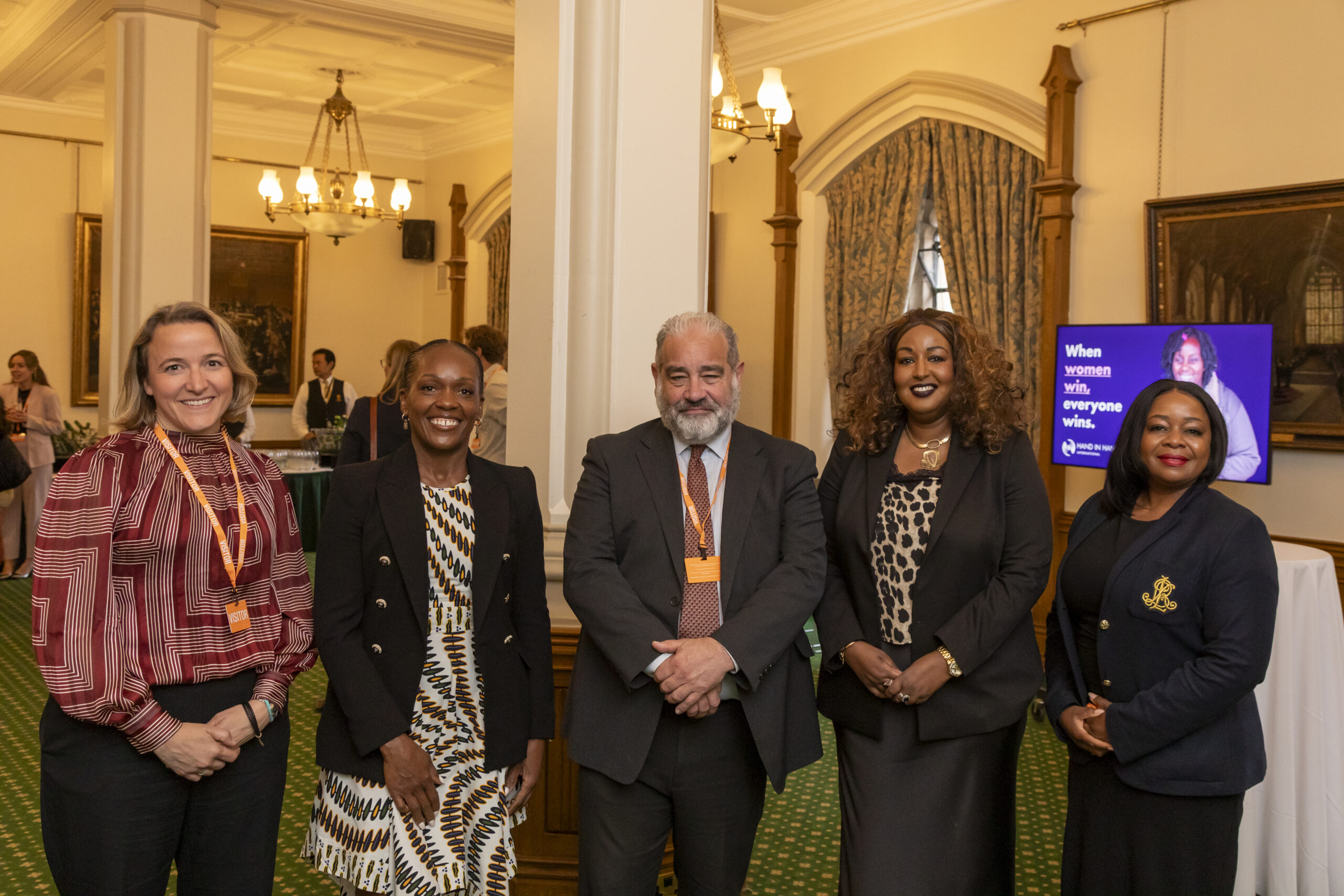
On Tuesday, 20th May, Hand in Hand supporters came together to honour the resilience of women entrepreneurs fighting poverty in some of the world’s toughest places.

The event took place in the historic Churchill Room at the House of Commons and was generously hosted by Uma Kumaran MP.

Over drinks and canapés, journalist and broadcaster Roger Hearing led a lively discussion on why women are key to ending poverty. He was joined by Hand in Hand CEO Amalia Johnsson, Councillor and campaigner Amina Ali, and writer and entrepreneur Effie Hwande.

Guests also heard powerful stories from Florence Ngou, a clothing retailer; Alice Wanjiku, a bakery owner; Monica Wanja, a dairy entrepreneur; and Maureen Njue, a salon owner. The four Kenyan women had worked together to create a moving video to show on the night.

Once struggling to put food on the table, these resilient entrepreneurs – thanks to support from Hand in Hand – have built thriving businesses, transformed their families’ lives, and inspired hope for future generations.

Speaking after the event, Hand in Hand CEO Amalia Johnsson, said: “It was a true privilege to share a room with so many of our long-standing  supporters, as well as friends old and new.

“As I said last night: One in four women in Africa is an entrepreneur. That’s millions of women like Florence, Alice, Monica, and Maureen. With the right support, these women are an unstoppable force – one that will ignite entire economies.”

Entrepreneurs in Nairobi’s informal settlements boost profits by 121%, thanks to Hand in Hand and Happel Foundation

A new programme by Hand in Hand International and the Happel Foundation is transforming the lives of entrepreneurs in Nairobi’s informal settlements. Equipped with new skills and resources, 1,000 small business owners in Kenya have seen their profits skyrocket by an average of 121% – equivalent to an additional USD 156 a month.

Micro, small, and medium enterprises (MSMEs) are the backbone of Kenya’s economy, employing 15 million people and contributing 40% to the country’s GDP. Yet, 98% of these businesses remain microenterprises, struggling with limited market access and scalability. To address these challenges, Hand in Hand and Happel Foundation launched ‘Driving Innovation, Growth, and Income Through Invigorating Small Enterprise’ (DIGITISE).

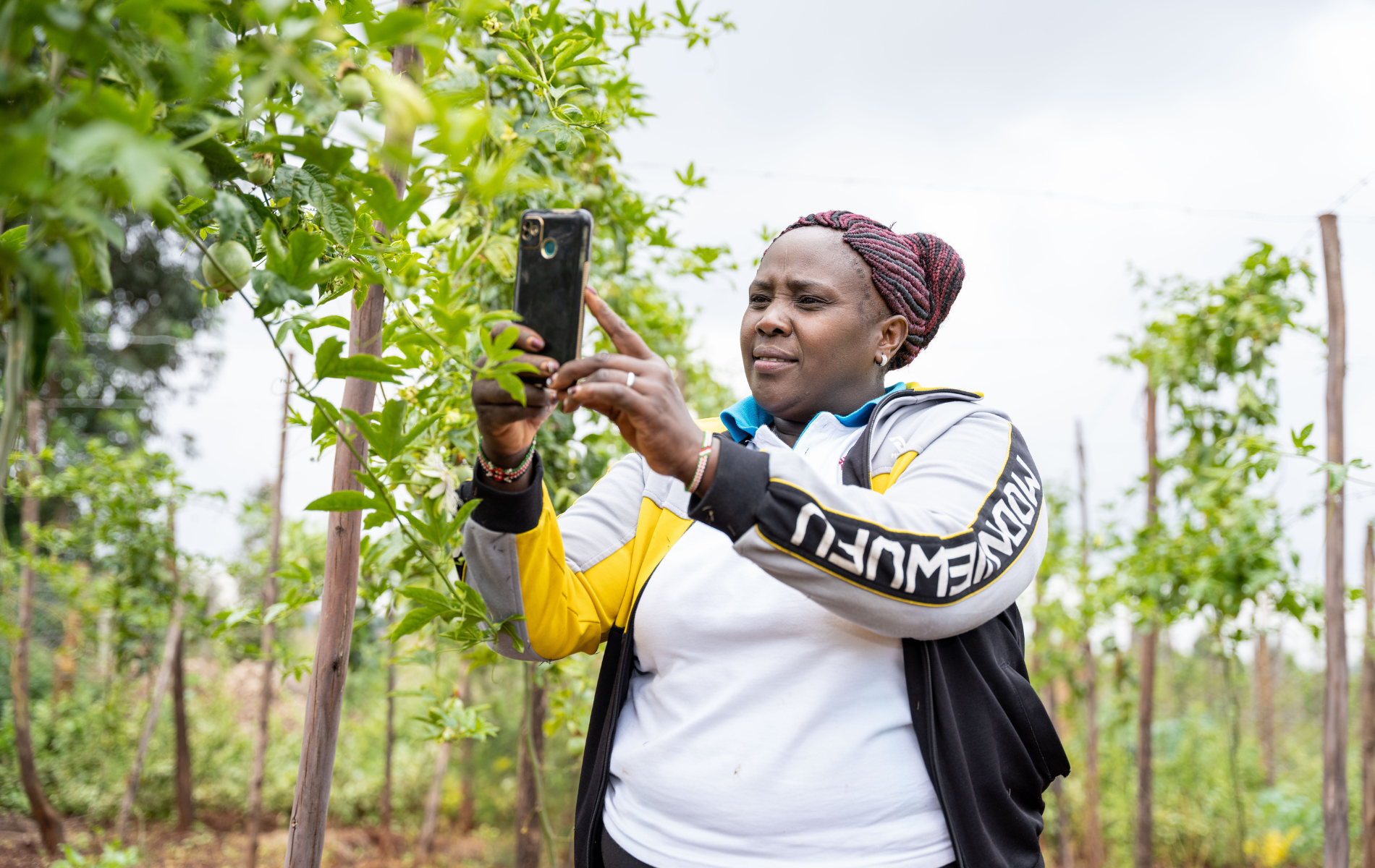
The three-year initiative will equip 3,000 entrepreneurs – more than 80% of whom are women, to scale up their businesses, providing advanced business training, support to access credit as well as coaching and mentoring. In addition to core business training, the programme will also test the effectiveness of including a digital curriculum to help business owners master e-commerce and digital tools to help their businesses grow.

The initial results from the digital training are compelling: entrepreneurs who received digital marketing and e-commerce training reported earning KES 5,000 (USD 108) more in revenue than those who did not. However, only 49% of those trained adopted digital practices, highlighting the need for further intervention to drive adoption – especially for women, who face greater barriers to smartphone ownership and internet access.

Alexander Lanz, Managing Director, Happel Foundation, said: “Micro, small, and medium enterprises (MSMEs) are the backbone of Kenya’s economy, yet the vast majority of these business owners struggle to scale, facing systemic barriers to growth – instead, subsisting on or just above the poverty line.

“Through the DIGITISE programme, we are providing these entrepreneurs with not just skills, but also market linkages, credit access, and digital tools to grow their businesses, and galvanize local economies”

Nick Lynch-Staunton, Head of Programmes, Acceleration and Climate, Hand in Hand International, said: “These results confirm that digital marketing has a tangible impact on revenue and profit. As we move forward with cohorts two and three, we will focus on breaking down barriers to digital adoption, particularly those facing women, ensuring even more entrepreneurs in under-served communities can take part in the digital economy, earning more and lifting their families out of poverty for good.”