Hand in Hand named ACT Charity of the Year for third year running

It’s being billed as the Association of Corporate Treasurers’ ‘(Not the) Annual Dinner’, but for the third year running Hand in Hand International most definitely is the Charity of the Year.

On Wednesday 11 November the ACT’s membership will not meet in a packed ballroom in London’s Mayfair to ring in the premier networking event in the corporate finance calendar. Instead, they’ll meet online as the event goes virtual – including a live online auction in support of Hand in Hand.

Funds raised on the night will go towards Hand in Hand’s Fund for Fearless Women, helping vulnerable women beat the odds and succeed as entrepreneurs, lifting their families and their communities out of poverty.

Hosted by business leader and BBC presenter David Meade, the event features an address from Justin Welby, Archbishop of Canterbury.

Hilti Foundation, Hand in Hand announce major recovery project

From coronavirus to climate change, poverty to food security, humanity’s greatest challenges prove that we, the global family, depend on each other.

Now, a new partnership between The Hilti Foundation, Hand in Hand International and thousands of smallholder farmers across East Africa proves that when our global family comes together, no challenge is too big to overcome.

Launching this month thanks to a US $4.2 million investment from the Hilti Foundation, the three-year project aims to reach 24,000 farmers across Kenya and Tanzania, creating almost 17,000 enterprises and 22,000 jobs. Members will be trained to run some of the most profitable agri-businesses in the region, then recruited into its most robust value chains, helping them rebuild from coronavirus and stay thriving for years to come.

Focusing on dairy, poultry and high-margin produce, the project is the second between Hand in Hand and The Hilti Foundation, bringing the overall number of farmers reached by the partnership to 40,000. Changes to women’s decision-making power in the home will be measured. And climate-resilient practices such as topsoil regeneration, biodiversity and rainwater harvesting will be emphasised throughout.

“The Hilti Foundation was committed to expanding our partnership with Hand in Hand before the outbreak of Covid-19. In the context of the global pandemic, our program in Eastern Africa has become even more relevant: enabling smallhold enterprises in rural areas to grow into flourishing businesses creates economic and social development for entire regions.” said Werner Wallner, The Hilti Foundation CEO.

Dorothea Arndt, CEO of Hand in Hand International, said: “Covid-19 is already leaving a global economic crisis in its wake. As we switch from saving lives to saving livelihoods, organisations like Hand in Hand will be crucial in leading the recovery. And strategic partners like The Hilti Foundation, committed to creating opportunities for people to take their lives into their own hands, will be more important than ever before.”

For more information about the project, please contact Senior Partnerships and Project Officer Dan Browne.

By the numbers


24,000 smallolder farmers

17,000 enterprises

22.000 jobs

95% of Hand in Hand members report improved quality of life

From designing new projects to evaluating old ones, Hand in Hand puts our members at the centre of everything we do. So last year, we asked 60 Decibels – experts in measuring impact through a “customer feedback lens” – to find out what our members in Kenya are saying about our work.

For two weeks in November, the team at 60 Decibels interviewed more than 170 members who’d completed our training, all within the last two years.

Here’s what they had to say:

  • Hand in Hand’s training is useful. 95 percent of respondents were still using it in their business.
  • Hand in Hand’s training improves people’s lives. 95 percent saw improvements in their quality of life after completing our training. Bigger incomes were the main reason why.
  • Hand in Hand goes where other NGOs don’t. 92 percent of respondents said there was no alternative to Hand in Hand where they lived.
  • Given a choice, they prefer Hand in Hand. Among respondents who had an alternative, 85 percent said Hand in Hand was better.
  • They could use more credit. Asked for suggested improvement, 34 percent of respondents suggested increased financing, the most common of any response.

Conducted before the threat of coronavirus was known, the survey will nevertheless help us tailor our post-Covid-19 response, providing insight into what’s working for our members and where we can be of more help. More on that in weeks in and months to come.

Hand in Hand fights spread of Covid-19 in Afghanistan

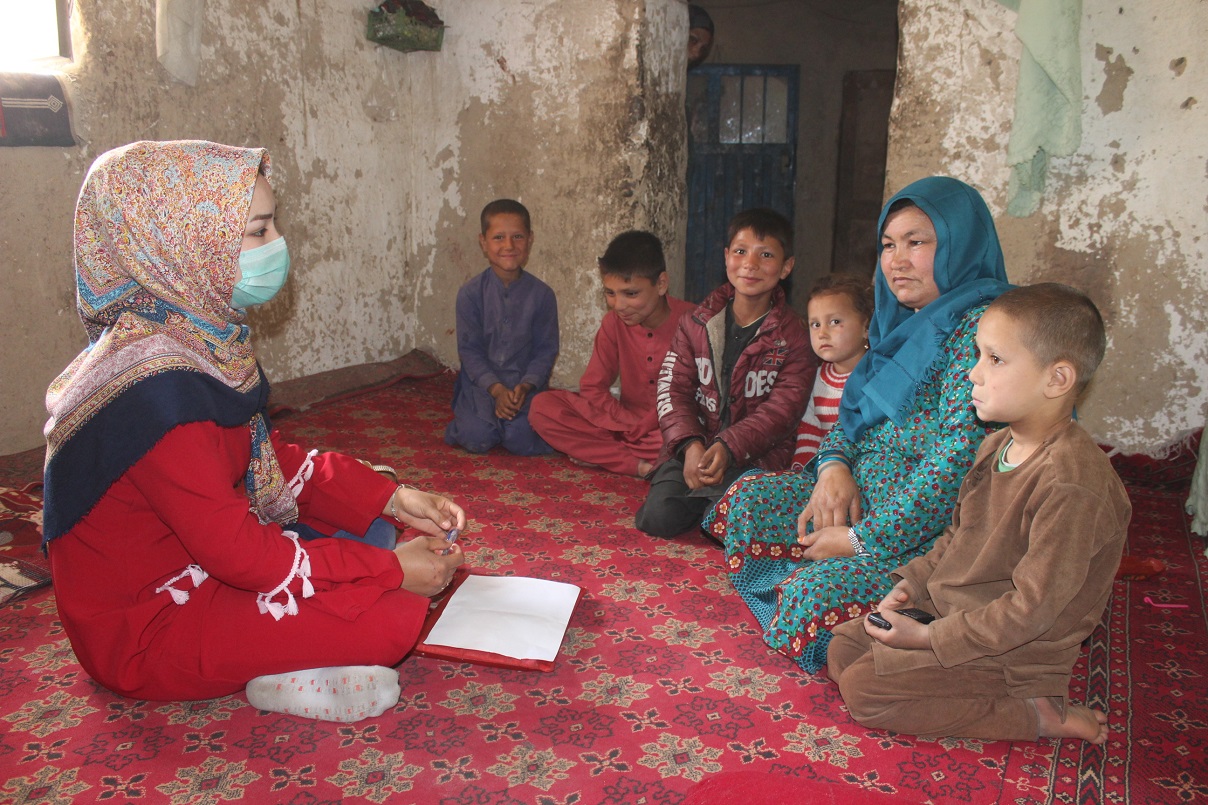
Hand in Hand Afghanistan is joining the fight against Covid-19, sharing virus prevention guidelines with families in some of the hardest-to-reach areas in the country.

Lessons in handwashing, social distancing and more have appeared alongside our usual business and skills training since the start of last week, when the country reported its earliest cases.

Other measures taken so far include:

  • Limiting training sessions to three to five members as opposed to the usual 20 to 30.
  • Wherever possible, conducting training in members’ homes.
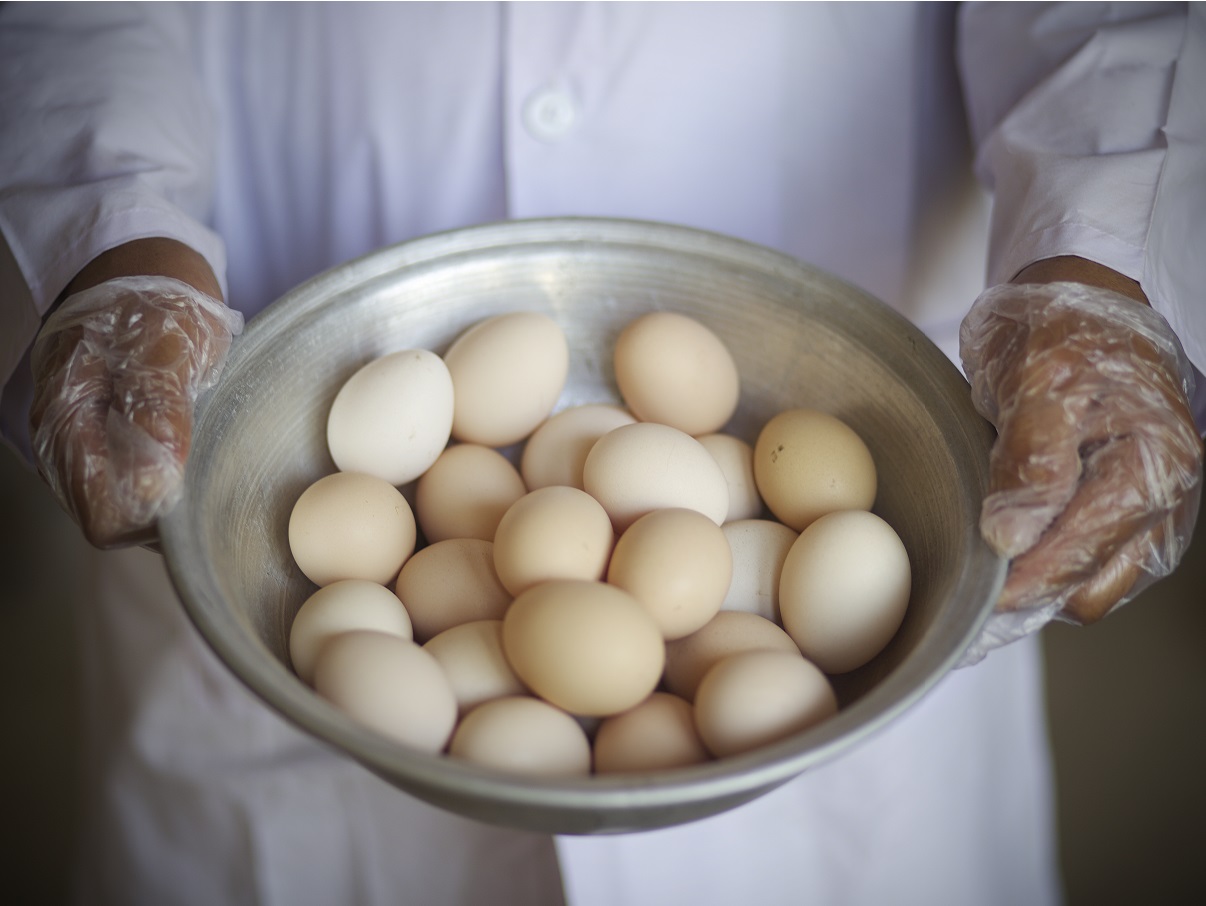
  • In some projects, distributing livestock and chickens slightly ahead of schedule. In the event of a lockdown, chicken eggs in particular will be a vital source of nutrition. Besides, we don’t want members’ training to go to waste.
  • Prioritising training modules that will do the most good during a crisis (for now, marketing takes a backseat to poultry farming, for example).

Forty cases of Covid-19 and one death have been reported in Afghanistan as of 23 March. Home to one of our biggest projects in the country, Herat Province is the epicentre of the outbreak, with most cases arriving from neighbouring Iran where thousands of Afghans are employed. Cases are expected to jump as more people return from Iran every day.

Visit our Covid updates page for the latest information on our programmes in Afghanistan and beyond.

Hand in Hand teams up with Visa to empower women entrepreneurs

What happens when thousands of unemployed women in Africa’s biggest slums are empowered to take control of their finances and launch their own businesses? And when thousands more of the most promising micro-entrepreneurs in those same slums receive specialist training, financial services and mentor support to help level up their businesses – what happens then?

Thanks to a ground-breaking new partnership with Visa, the world’s leader in digital payments, we’re about to find out. Launched with a US $2.4 million grant from Visa, the three-year project aims to reach 10,200 members in two groups in the slums of Greater Nairobi, some of the biggest anywhere on Earth.

Financial inclusion, a prerequisite to small-business growth, will feature centrally throughout the programme, which aims to elevate both groups to a position where they can access the financial services they need.

Equality for each

This International Women’s Day, millions of individuals will converge on a collective theme: #EachforEqual. Hand in Hand’s partnership with Visa flips the equation, seeking equality for each of the 6,880 women who comprise 80 percent of the programme’s first group, our Launchpad.

Women living in Nairobi’s slums face restrictive norms and attitudes that keep them from earning their own incomes, controlling their own assets and making decisions for themselves. Hand in Hand’s package of Self-Help Groups, business and skills training, mentorship, financial inclusion and market linkages will empower our Launchpad members to overcome those barriers and increase their incomes

Scaling up our most promising micro-businesses

Our second group, the Accelerator, takes established micro-businesses to new heights. Here, we’ll select 1,600 pre-existing entrepreneurs for high-growth potential – including Hand in Hand’s most promising entrepreneurs from previous projects – with an eye to helping them scale up. Urban in nature, businesses in this category will range from retail shops and salons to garbage collectors, upcycled-waste producers and more. At least 50 percent will be owned and run by women.

Since our very first days in rural south India, Hand in Hand has prioritised a single demographic: women living in extreme poverty, defined since 2015 as those earning less than US $1.90 a day. So why, almost 20 years later, are we expanding to include our Accelerator class?

Small businesses lift up the communities around them by creating employment opportunities and enhancing livelihoods in a multiplier effect. But the answer is also strongly reflected in a 2019 survey of our members in Kenya, conducted by impact measurement leaders 60 Decibels. On the whole, found the survey, Hand in Hand’s members are pleased with our programmes: 95 percent said their quality of life improved after taking our training, and 51 percent said it improved “very much”.

Still, when researchers asked for improvements a number of key themes emerged. Eleven percent of respondents, many fitting the accelerator profile, said they wanted “expanded content” to help them keep learning and growing. For 34 percent, the answer was even simpler: “increased financing”.

Hand in Hand’s Enterprise Incubation Fund already provides finance to members at the Launchpad level. In keeping with our ethos of self-help, that finance is limited to one loan cycle of roughly US $200 – a bridge to other, more formal providers. By helping our Accelerator members scale up, we’re extending that bridge further, to a place where lines of credit are comfortably within reach. In other words, they receive “expanded content” – more training – and “increased financing” all in one go.

The programme will also see investment in Hand in Hand’s IT infrastructure to support digital program data and collection. Eventually, this technology will be scaled across all 23 of Hand in Hand Eastern Africa’s field offices, enabling programme managers to learn and adapt in real-time.

Drink Pact Coffee. Support Hand in Hand

At Hand in Hand International, two things get us out of bed in the morning: women’s entrepreneurship and several cubic metres of coffee. So imagine how thrilled we are to partner with Pact Coffee, the UK’s finest purveyors of Direct Trade joe, delivered to your door.

Pact doesn’t just talk the talk when it comes to social purpose, they walk the walk – with a pep and sense of purpose that only the truly caffeinated will understand. That means embracing a Direct Trade model by working directly with farmers, paying anywhere from 25 percent to 125 percent above Fairtrade rates.

Lucky for Hand in Hand, it also means going an extra step further in honour of #InternationalWomensDay and donating £1 from every sale of a very special coffee during the month of March. That coffee is El Triunfo and it’s grown by Karla Baquero, the youngest member of a women’s co-operative in Colombia that supplies beans to Pact.

Hand in Hand wins AGFUND prize

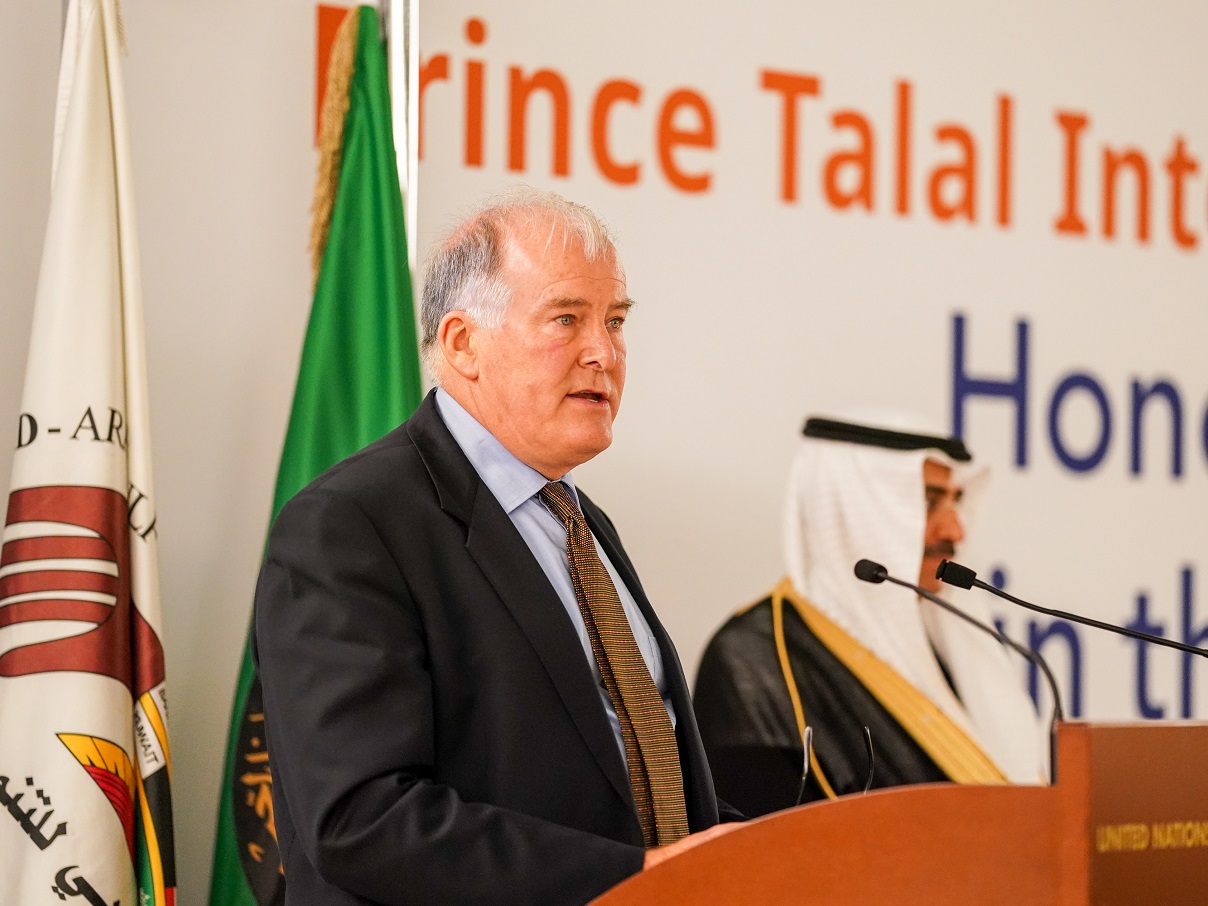
Hand in Hand has won the Prince Talal International Prize for Human Development.

Awarded by AGFUND, the US $400,000 prize recognised a Hand in Hand project in Sarepul Province, Afghanistan that created more than 9,700 microbusinesses and 13,300 jobs.

Hand in Hand’s submission – one of 166 from 78 countries – was selected as winner by a committee that included Professor Muhammad Yunus, Nobel Prize Laureate and founder of Grameen Bank, and Her Majesty Queen Sofia of Spain. Past winners include BRAC, Habitat for Humanity and the United Nations Development Fund for Women.

“From our board of trustees to our staff in Afghanistan who do such amazing work every day, Hand in Hand is honoured to receive this award,” said Hand in Hand International CEO Dorothea Arndt. “We thank AGFUND, and dedicate this award to each and every one of the 9,712 inspiring women and men of Sarepul Province who joined our project made it such a success.”

Held at the United Nations’ Palais des Nations in Geneva, Switzerland, the awards ceremony capped AGFUND’s eighth annual development forum, ‘Empowering Women through Financial Inclusion’. Hand in Hand International Trustee Dr John Barrett accepted the award.

Three smaller prizes were awarded to Kenya’s Dandora Dumpsite Rehabilitation Group, Rwanda’s Ministry of Youth and Egypt’s Ms. Nawal Mostafa, founder of the Children Female Prisoner’s Care Association.

All proceeds from Hand in Hand’s prize will go towards our programmes in Afghanistan.

Hand in Hand partners with Cartier Philanthropy on women’s economic empowerment

A new joint-project between Hand in Hand, Cartier Philanthropy and the International Center for Research on Women (ICRW) is boosting women’s economic empowerment in Tanzania by involving a group that – on this subject, anyway – almost always goes overlooked: men.

Launched this month, the programme aims to train 600 women to create and manage their own enterprises while changing attitudes that stop them from earning an income in the first place. When the project concludes in 2022, the lessons we learn will feed into a ‘male engagement toolkit’ being developed by ICRW, Cartier Philanthropy and other partners and shared sector-wide. Not only will Hand in Hand’s members benefit, but a potential 10.5 million Self-Help Group members worldwide.

The challenge

Any expert worth their salt will tell you – almost reflexively, at this point – that women are crucial to development. “When you invest in a woman’s empowerment it has a ripple effect, helping families, communities, and countries achieve long-lasting benefits,” says the Bill and Melinda Gates Foundation. Only recently, however, has the sector embraced the idea that in order for women’s economic empowerment to reach its full potential, men will need to buy in.

Tanzania is a perfect case in point. Although women here comprise 52 percent of farmers, they are less than half as likely as men to get paid, according to DFID-funded research group K4D. In fact, says a K4D report, most husbands prefer their wives to do unpaid domestic work than to earn an income outside the home. One result is that few women have bank accounts, collateral or social networks – prerequisites for starting a business.

Poverty in Tanzania is complex and multifactorial. But if women’s fortunes in this country of 57 million are to fully transform, so too must the attitudes that restrict them. So too, in other words, must the attitudes of men.

The project

Hand in Hand’s joint-project with Cartier Philanthropy and ICRW is designed both to help kickstart and learn more about that transformation. By the time the project is complete, 300 women will receive our usual livelihoods training, along with specialised training in women’s economic empowerment. Think lessons about earning and spending their own money.

We’ll also recruit 300 men – those same women’s husbands, fathers and brothers – to undergo livelihoods training of their own. Just like their female counterparts, men will also receive gender-specific training developed in partnership with ICRW. But here, the focus will be squarely on shifting their perceptions about women’s role in income generation – and their own in domestic labour. At the same time, we’ll reach out to the community more broadly, working with grassroots groups and others to shift norms around men’s and women’s roles. And to bolster the reliability of our results, we’ll recruit a comparison group of 300 women who receive livelihoods training only.

Among women, we aim to see a 20 percent increase in net household income, along with marked increases in decision-making and mobility. Among men, we aim to see a tangible change in perceptions and behaviours, including support for women’s enterprises and more time spent on domestic labour.

Visa and Hand in Hand’s entrepreneur training communities boosts incomes in Nairobi’s most deprived communitie

Visa and Hand in Hand’s entrepreneur training communities boosts incomes in Nairobi’s most deprived communities: Kenya Micro-Enterprise Success Programme, Endline report by 60DB
Members saw an average income uplift of USD $156 per month
Hand in Hand’s Kenya Micro-Enterprise Success Programme (KMES) project, funded by Visa Inc., has resulted in entrepreneurs typically increasing their incomes by USD $156 per month, according to a report by 60DB.
The project is the first of its kind to target existing small business owners as well as first-time entrepreneurs. Delivered in Nairobi’s informal settlements, which the UN describes as “some of the most dense, unsanitary and insecure slums in the world,” the project aimed to boost local economies, create jobs, and lift families out of poverty.
The three-year programme provided 8,200 start-up entrepreneurs (6,560 of them women) living below the poverty line with the core business training they needed to start their own micro enterprises. It also provided advanced training to 1,600 people (1,280 of them women) who already owned and operated small businesses in the area, as part of its ‘accelerator’ cohort.
The report found:
– Members are now more resilient, and report improved ability to meet financial needs, with 91% and 94% of start-up and accelerator members respectively able to come up with the funds to cover an emergency.
– Start-up members increased their profitability by an average of 15%, earning an additional USD $150 a month. Accelerator members boosted their businesses’ profits by an average of 95%, earning an additional USD $192 a month.

– Women in both cohorts are now more involved in joint decision-making with their spouses. 54% of women in the start-up cohort and 56% of women in the accelerator cohort make joint decisions with their spouse when it comes to matters regarding health, visiting friends and family and large purchases.
– Members continue to see changes in their quality of life a year after the Hand in Hand training. 97% of start-up members and 95% of accelerator members say their quality of life has improved because of the Hand in Hand training still a year later.

Hand in Hand expands partnership with German government

Hand in Hand Afghanistan’s work with returnees and internally displaced persons (IDPs) is set to reach new heights this year, thanks to a major expansion funded by Deutsche Gesellschaft für Internationale Zusammenarbeit (GIZ), the German government’s development agency.

Launched in January under GIZ’s ‘Returning to New Opportunities’ programme, the project aims to help 1,500 returnees, IDPs and host community members work their way towards a prosperous future in the country’s growing poultry value chain by the end of 2018. It follows on the heels of a successful pilot project, also funded by GIZ, which trained 500 returnees and IDPs to do the same.

Once refugees, now returnees

Imagine if during the 2015-’16 migrant crisis some 50 million people, not 3 million, arrived on Europe’s shores, hungry and desperate for work. Now imagine if Europe was one of the poorest places on Earth, lacking even the most basic services required to keep up.

That, proportionately, is the problem facing Afghanistan, the world’s largest source of refugees for more than three decades, today facing the inverse problem: the world’s largest returnee crisis, with some 2.5 million people expected back in the country this year and next. Add another 1.8 million IDPs, many fleeing intensified fighting between the Taliban and Afghan army in Jawzjan and Kunduz provinces, and the true scale of the problem becomes clear.

Recognising that this growing cohort cannot be ignored if the Sustainable Development Goals are to be achieved in Afghanistan, Hand in Hand and GIZ teamed up last year.

The pilot

Implemented from September to December 2017, the Hand in Hand-GIZ pilot project proved Afghanistan’s poultry sector is ideally suited to returnees and IDPs. Skills are easily learned. Incomes, compared to other sectors, are high. Businesses can be run from entrepreneurs’ own households, whatever the season. And nutrition and food security improve. Furthermore, by training returnees and IDPs in the same groups as local populations, strangers become friends and communities cohere. By the time the pilot was done, 500 new members had started poultry farms, establishing three associations to help take their eggs to market.

Lessons learned

The pilot also highlighted several areas for improvement. Most notable, perhaps, was a preference among members for natural breeding – that is, incubating fertile eggs under brooding hens – over solar powered incubation machines. True, this method is more time consuming, they told us. But it also eliminates their reliance on technicians, thus making them more self-sufficient, and functions whether in rain or shine.

We’re also changing the way eggs are stored. At the pilot’s outset, it was suggested that communal spaces be renovated to accommodate solar powered chillers to keep eggs cool before they reached market. But negotiating with local authorities who owned the spaces proved slow-going and costly, forcing a change in tack. Consequently, chillers will now be stored in new ‘conex-prepared homes’ – picture shipping containers – instead.