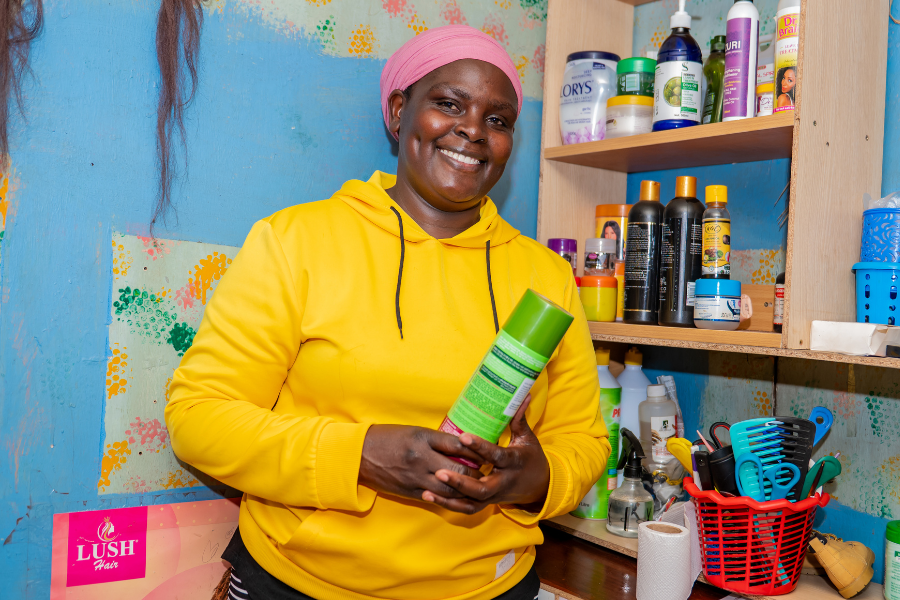
“I can pay for things for my granddaughter that I could not for my daughter” Florence, Fashion Entrepreneur, Nairobi

Across Kenya, women led microbusinesses often face barriers to growth – from limited access to finance to low digital literacy. Bridging this gap is essential for building sustainable livelihoods and inclusive economic development.

From hairdresser to salon owner
Florence Omollo, a single mother from the informal settlement, Kibera, in Nairobi, began her working life as an assistant in a local hair salon. Soon, clients were seeking her out directly and so she decided to start her own business – now known as Be Smart Salon.
She started small, offering just blow dries and hair braiding but, with limited knowledge of how to run a business or access to the credit she needed to expand, it did not flourish. Customers even had to bring their own hair braids.

Learning to think digitally

In April 2025, Florence joined Hand in Hand where she gained essential skills in business growth planning, management, branding, and customer engagement. She learned how to record income and expenses, including to allow for her salary so that she did not ‘tap income that was going somewhere else.’

Crucially, Florence also embraced digital marketing, signing up on WhatsApp Business and TikTok. Initially, Florence had thought that digital marketing was only for big, professional salons and she really didn’t think that people from ‘high end’ areas would visit a hair salon in Kibera. But, with the help of her Hand in Hand business trainer, she learned how to create professional posts and the results were immediate – new customers began visiting her salon and she has even started offering home visits to meet the rising demand.

Expanding her services
With her increased turnover and confidence, Florence has expanded her services to include nail care, employing another woman to meet customer demand. She now ensures the salon stocks all necessary products, so clients no longer need to bring their own supplies.

By summer 2025 Florence’s monthly revenue had already grown from $675 to $788 and she’s decided to save the first $2 she earns each day. After completing her training, she even felt confident enough to take a commercial loan, investing the funds directly into her business to support further growth.

A new level of independence

Florence’s business success has transformed her family life. She supports her daughter and granddaughter, pays her daughter’s college fees and can now afford outings for the three of them “to the park and to have something to eat.” She is also able to visit her parents her parents in Kisumu more than once a year – an eight hour trip she can now afford to make regularly.
“Now I can pay for things for my granddaughter that I could not for my daughter,” Florence says. “I never thought people from outside Kibera would come to my salon, but they do.”
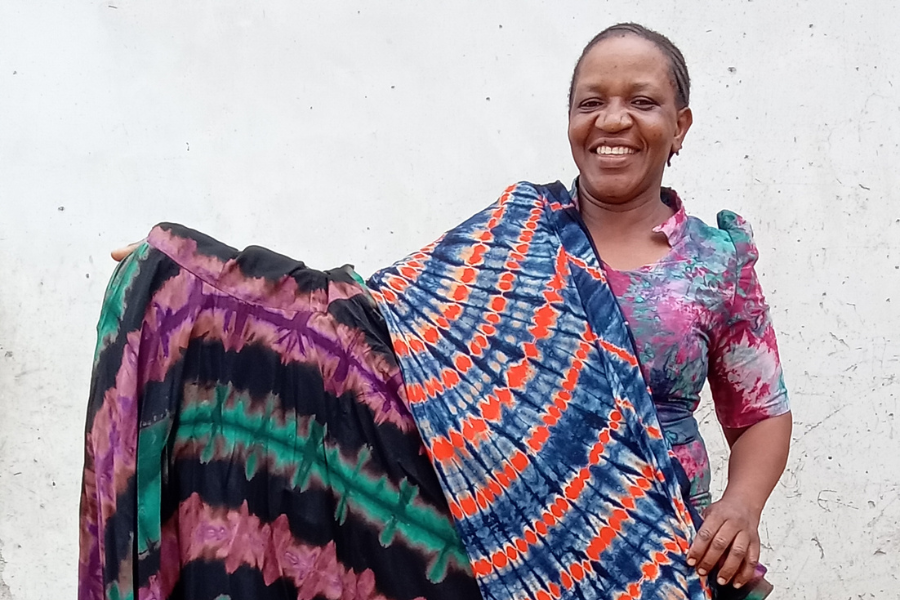
“I have become a symbol of resilience and creativity in my community” Gaudensia, Fashion Entrepreneur, Tanzania

Gaudensia lives in Singida, Tanzania, where almost a third of people in rural areas live below the extreme poverty line.

In January 2024, she joined Hand in Hand’s programme in the hope of turning her talent for designing and making batik fabrics into a business.

Guided by Hand in Hand trainers, she learned the financial and marketing skills she needed to succeed.

From these small beginnings, her reputation spread far beyond her village. Within a year, her monthly income had increased from $35 to $233.

“It is like my life was in the dark before I joined Hand in Hand. I didn’t know how to use my talent and what I had despite being trained. I am now known by many people, I get money from what I know and the skills I have.”

“I was no longer just a batik-making artist; I have become a symbol of resilience and creativity in my community.”

Her success has transformed family life too. Her husband, Joshua, who always believed in her talent, now actively supports the business, helping her source materials and meet growing demand.

Gaudensia’s ambitions continue to grow. She dreams of opening a shop where she can sell her designs not only in her village, but across Tanzania. She also hopes to establish a training centre where women and young people can learn the art of batik making.

“I want to run a successful business and for my products to go outside my country. I want to be an example to women in my village and for young people to learn from me.”

How digital skills helped Lizzie rebuild her business and income

In Nairobi’s most underserved communities, women are far less likely than men to have access to the internet. Yet digital connection can be life-changing – enabling women to grow businesses, reach new markets and build more secure futures for their families.

For Elizabeth “Lizzie” Nzule, gaining practical digital skills became the turning point in rebuilding her livelihood. Looking back, Lizzie says, “When I remember where I started, I was crying all day long. Now I have my own business and employ someone else. My life has changed beyond what I imagined.”

When Lizzie lost her office job during the Covid-19 pandemic, the family could no longer afford rent in the city, so they sold household essentials and moved to Mumbi, where living costs were lower.

Determined to earn an income, Lizzie then began selling cosmetics from home. But without market insight or business skills, she invested in products that didn’t sell.

In 2023, Lizzie joined Hand in Hand. She learned how to track income and expenses, manage stock, plan for growth and use social media to promote her business.

Applying these skills, Lizzie created her own brand and opened Lizzie Collections, a cosmetics shop in Mumbi. She began using WhatsApp, Instagram and TikTok to share professional content and respond directly to customers. Lizzie has since expanded her business to include a nail spa.

Her monthly income has almost doubled, she has hired one employee, secured medical insurance for her family and can now afford her son’s college fees.