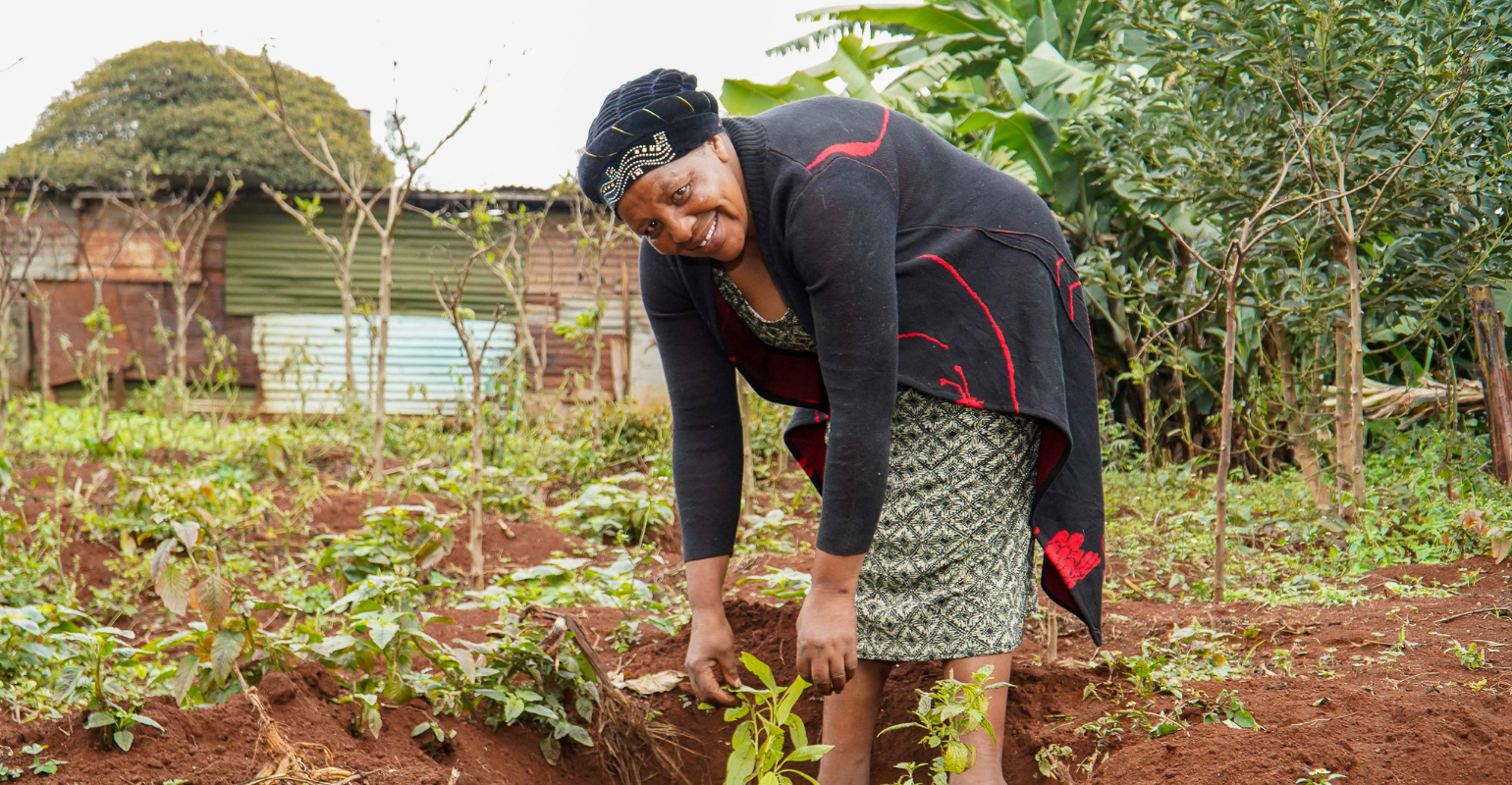
Hand in Hand International refreshes Theory of Change

The Hand in Hand model has been developed over twenty years and proven to deliver long-term, cost-effective change for the women we work with, households and communities.

In the last five years, we have expanded our programming in gender transformation, regenerative agriculture, digital skills and advanced business training.

Last year, we set out to complete a comprehensive literature review to test our assumptions and ensure our model continues to align with best practice going into a new strategic period in 2026.

“The refreshed Theory of Change better reflects and evidences the work we do: changing lives via livelihoods programmes that incorporate gender transformation, regenerative agriculture, digital skills and advanced business training for women in some of the world’s toughest places.”

Gretchen Cloutier, Senior MEL Advisor

Our refreshed Theory of Change shows how our step-by-step approach results in poverty reduction and improved quality of life time and time again.

Learn more about our Theory of Change:


How regenerative farming helped one family move forward

In Ombasa, rural Kenya, Eunice Achieng, a mother of four, once relied on maize and beans, a few chickens and a cow just to keep the family going. But, as the climate changed and the soil became less fertile, costs rose, yields and profits fell. To survive, she had to work as a casual labourer on other people’s farms.

Things began to change when Eunice joined a Hand in Hand. Through training and group support, she learned how to rebuild her farm using regenerative agriculture and how to make smarter financial decisions.

Today, Eunice’s farm looks very different. Composting has helped to restore the farm’s soil and reduced the need for commercial fertiliser. Cover crops help retain moisture and keep the soil cool during hot spells, while mulching and minimum tillage protect and rebuild soil structure.

Intercropping and crop rotation have diversified yields and disrupted pest and disease cycles. A range of fruit trees provide shade, better nutrition for the family and a more resilient farm ecosystem.

Poultry now provide regular income, eggs for the household and manure for composting.

Today the farm is thriving and the impact on family life striking. Eunice no longer works on other people’s farms – she and Erick work together on their own farm, sharing tasks according to their strengths. The whole family now enjoys three meals a day, school fees are covered and they are planning to expand their home.

How digital skills helped Lizzie rebuild her business and income

In Nairobi’s most underserved communities, women are far less likely than men to have access to the internet. Yet digital connection can be life-changing – enabling women to grow businesses, reach new markets and build more secure futures for their families.

For Elizabeth “Lizzie” Nzule, gaining practical digital skills became the turning point in rebuilding her livelihood. Looking back, Lizzie says, “When I remember where I started, I was crying all day long. Now I have my own business and employ someone else. My life has changed beyond what I imagined.”

When Lizzie lost her office job during the Covid-19 pandemic, the family could no longer afford rent in the city, so they sold household essentials and moved to Mumbi, where living costs were lower.

Determined to earn an income, Lizzie then began selling cosmetics from home. But without market insight or business skills, she invested in products that didn’t sell.

In 2023, Lizzie joined Hand in Hand. She learned how to track income and expenses, manage stock, plan for growth and use social media to promote her business.

Applying these skills, Lizzie created her own brand and opened Lizzie Collections, a cosmetics shop in Mumbi. She began using WhatsApp, Instagram and TikTok to share professional content and respond directly to customers. Lizzie has since expanded her business to include a nail spa.

Her monthly income has almost doubled, she has hired one employee, secured medical insurance for her family and can now afford her son’s college fees.

TUI Care Foundation, Friedkin Conservation Fund and Hand in Hand International launch new project to nurture nature and economies in rural Tanzania

Hand in Hand International, with funding from TUI Care Foundation’s Field to Fork Programme and Friedkin Conservation Fund, has launched a new two-year project tackling rural poverty in Tanzania. This project will unlock higher incomes for 2,700 people  – 80% of them women – and unleash the potential of women to create change in their communities by creating or expanding 1,890 microenterprises and generating 2,475 jobs.

Drawing on 20 years of experience, this partnership expands Hand in Hand International’s reach into Meatu District. In Meatu District, poverty is widespread, with most people surviving on less than $1.08 per day. Families rely on smallholder farming for income, but climate change-related drought is driving down yields and threatening livelihoods. To address this, the programme will deliver business and technical training, facilitate access to credit, and open doors to new markets. It will also equip farmers with proven climate-resilient techniques, transforming them into eco-entrepreneurs. By unlocking financial resources and expanding market access, the programme aims to boost incomes by over 80%, strengthen climate resilience, and spark a wave of prosperity across entire communities.

In Meatu District, traditional gender roles continue to shut women out from autonomy and opportunity. Many are expected to shoulder the burden of domestic work and caregiving, often without freedom to make basic decisions. To change this, the initiative will deliver gender training, working with men, women and community leaders, to challenge the norms that hold women back and empower women to shape the future they want.

By investing in women smallholders and sustainable value chains – including sunflower farming, beekeeping and poultry – the project aims to unleash a ripple effect of opportunity, resilience, and leadership – powered by women, grown from the ground up.

“We’re thrilled to partner with Friedkin Conservation Fund and TUI Care Foundation on a project that will transform the lives of women living below the poverty line. When women earn more, the whole family benefits, and communities can map a sustainable route out of poverty,” said Amalia Johnsson, CEO of Hand in Hand International.

Alexander Panczuk, Managing Director of TUI Care Foundation, added: “At TUI Care Foundation, we are proud to partner with Hand in Hand International and Friedkin Conservation Fund to bring the Field to Fork Programme to Tanzania. This collaboration reflects our shared commitment to empowering communities through sustainable agriculture, inclusive entrepreneurship, and gender equality. By equipping women and smallholder farmers with the tools to thrive—both economically and environmentally—we are not only regenerating land and livelihoods, but also creating lasting links between rural economies and the tourism sector.”

Aurelia Klassarah, Program Director, at Friedkin Conservation Fund, added: “At Friedkin Conservation Fund we believe collective action, led by communities in Meatu District themselves, is crucial to economic empowerment. In this project, we’ll be tackling poverty at grassroots level by investing in sustainable value chains that the community have prioritised such as beekeeping – all while enhancing conservation and biodiversity awareness.”

Two new Trustees join the Hand in Hand International Board

We are delighted to announce the appointment of two new Trustees to our Board, Felisters Gitau and Iris Epple-Righi.

Felisters is an innovative business leader in the FMCG sector with over a decade of experience driving multi-million dollar initiatives that enhanced revenue and market share. Currently, she is CEO of Farmers’ Choice, a leading producer of fresh and processed meats in Kenya for over 40 years.

Hand in Hand International Chairman, Bruce Grant said, “Felisters’ partnership-building skills combined with her pan African market insight will help steer our mission to increase revenue and build financial resilience among subsistence farmers across the continent.”

Iris is a highly experienced professional in the premium fashion and lifestyle industry with long standing management positions at high end department store Breuninger, Tommy Hilfiger, Calvin Klein and as CEO at Escada till end of 2019. She now works on various supervisory boards.

Hand in Hand International Chairman, Bruce Grant said, “Iris is an outstanding addition to our board whose experience in creating long term growth at scale, combined with a passion for women’s leadership, closely relate to our own goals. She will help us to equip under-served women with the skills and resources to earn more money, panenhoki77 ignite local economies and lift nations out of poverty.”

Meet Magadalene Radier – eco entrepreneur

The world produces around 350 million tonnes of plastic waste each year, of which around 82 million tonnes is mismanaged or littered. This means it’s not stored in secure landfills, recycled or incinerated.

Mombassa’s population of 1.5 million people generates 900 tonnes of waste a day – a figure the city’s infrastructure simply can’t cope with. A lot of this waste works its way into the Mtopanga river, which was once a source of clean drinking water.

Magadalene Radier used to look at the plastic waste surrounding her home in one of the poorest areas outside Mombassa and despair. Life as a single mother of four was difficult enough without the added health hazard of mountains of rubbish.

Where there’s plastic to be cleared and recycled, there is money to be made.

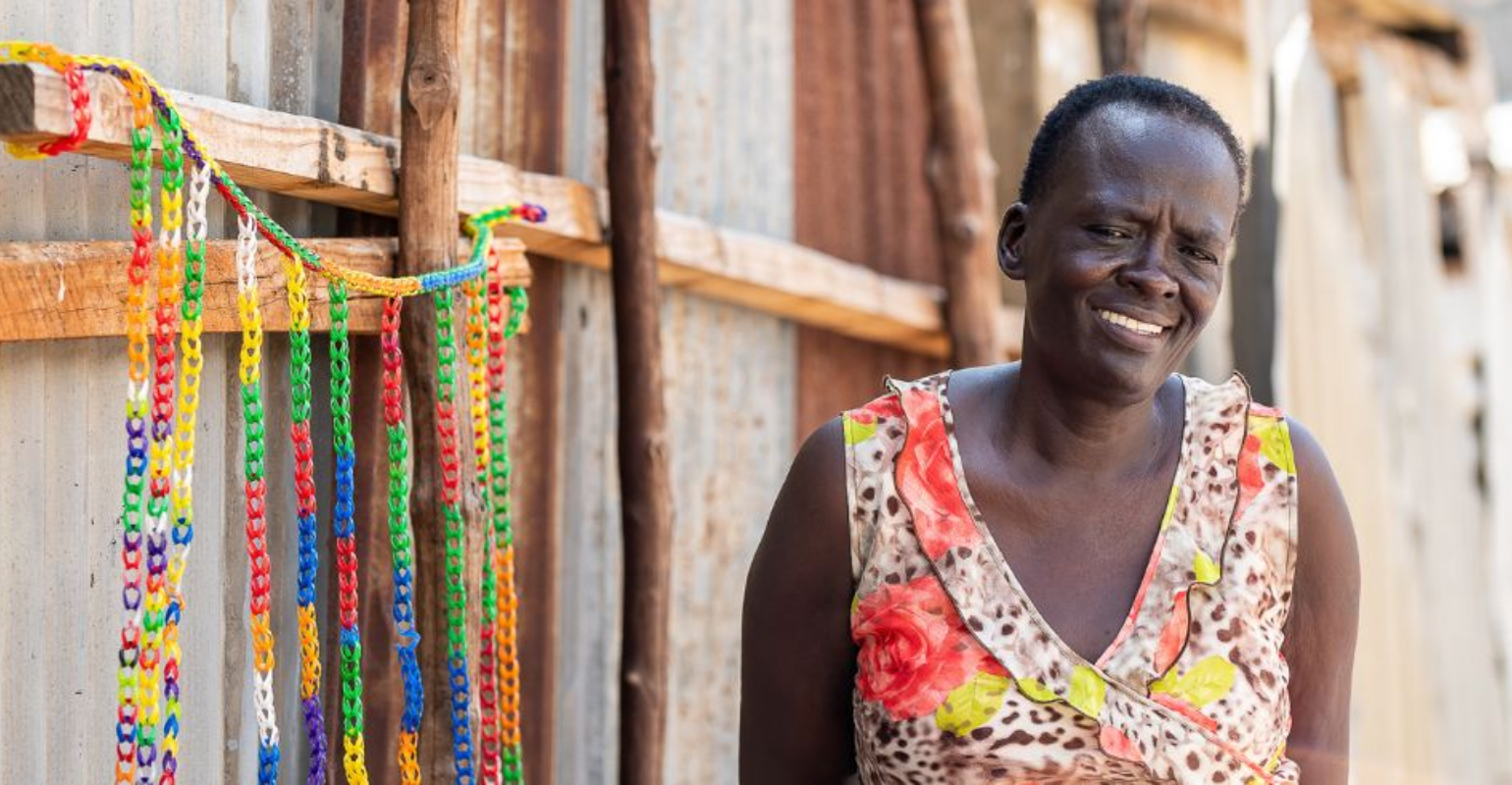
Magdalene joined her local Hand in Hand savings group where she learned how to start and run a small business. By embracing circular economy practices and techniques, she could make money out of the rubbish. She’d always been good at making things – what if she collected, cleaned and repurposed the plastic? Perhaps she could create something others would want to buy?

Today Magdalene’s recycled plastic flowers and garlands are in demand for local weddings and her children’s toys are popular with children and parents alike. This creativity, combined with her Hand in Hand business know how, has enabled her to earn 40 per cent more.

Today she can pay her household bills, her grandson’s school fees and, at the same time, reinvest in the business. What’s more she now needs help in her expanding business so employs some of her neighbours to collect the plastic waste.

“In everything I do, I think about the future of my children and the world we leave behind. Every small step towards a cleaner environment and more stable economy is a step towards a brighter future for all of us,” she says.

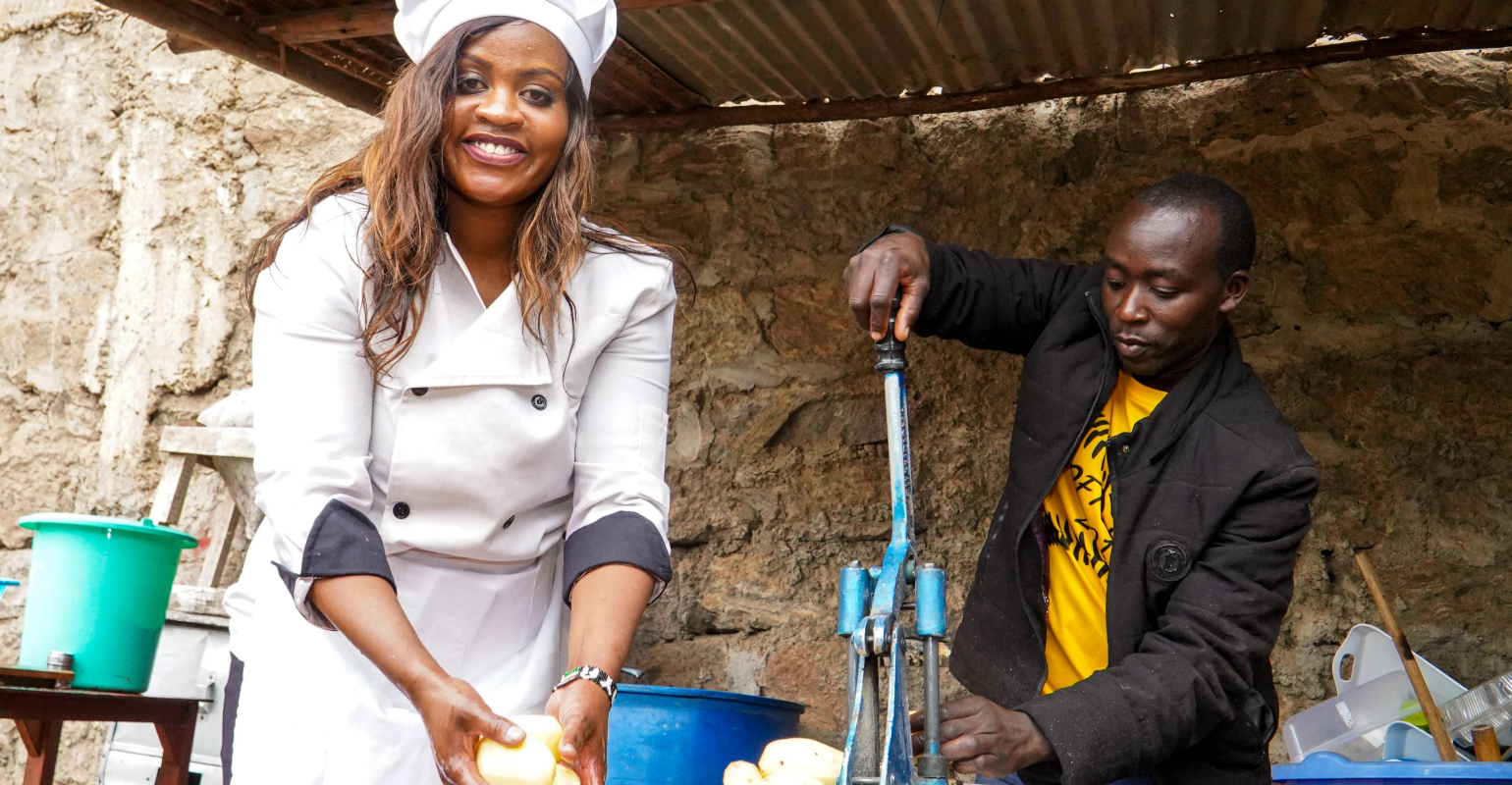
“I deliver to hotels, clubs, church congregations” Damiyana, Food Entrepreneur, Nairobi

Women often have less access to technology and the internet compared to boys and men. The gender digital divide in access to the internet remains the world’s largest in least developed countries and, at 32.9%, the gap is widest in Africa.

Did you know that while the Kenyan e-commerce sector is worth around $2bn, women are only half as likely as men to have access to the internet in Nairobi’s most deprived communities? Yet, if 600 million more women are connected to the internet in three years, this would translate to a rise in global GDP of between US$13 billion and US$18 billion

Online access brings business success

For someone like Damiana Musyoko, access to the internet meant the difference between a roadside stall selling fried fish with an income of US $160 a month and a commercial enterprise supplying hotel restaurants in Nairobi and sales of US $500 a month.

Bridging the digital divide

When Damania joined Hand in Hand’s Accelerator Programme, designed to equip successful micro-entrepreneurs to take their businesses to new heights, she was allocated a mentor and selected for additional training in digital marketing and sales. This included instruction on building her online product portfolio and setting up accounts on Facebook Marketplace and WhatsApp for Business. She also became a retailer on Jumia, Africa’s Amazon. Five months later, Damiana’s business was transformed.

“I have a Facebook account and I’m on TikTok. But it is the WhatsApp Business account that has made the difference. On WhatsApp I have 2,000 friends, so my posters get 200 views and many more shares. I deliver to hotels, clubs, church congregations. Hand in Hand, you have really made me grow!”

Damiana says.

Meet Mariam – changing the future for and her grandchildren

Through Hand in Hand’s proven business creation model, developed over twenty years, we’ve equipped five million women start and run small businesses that stand the test of time.

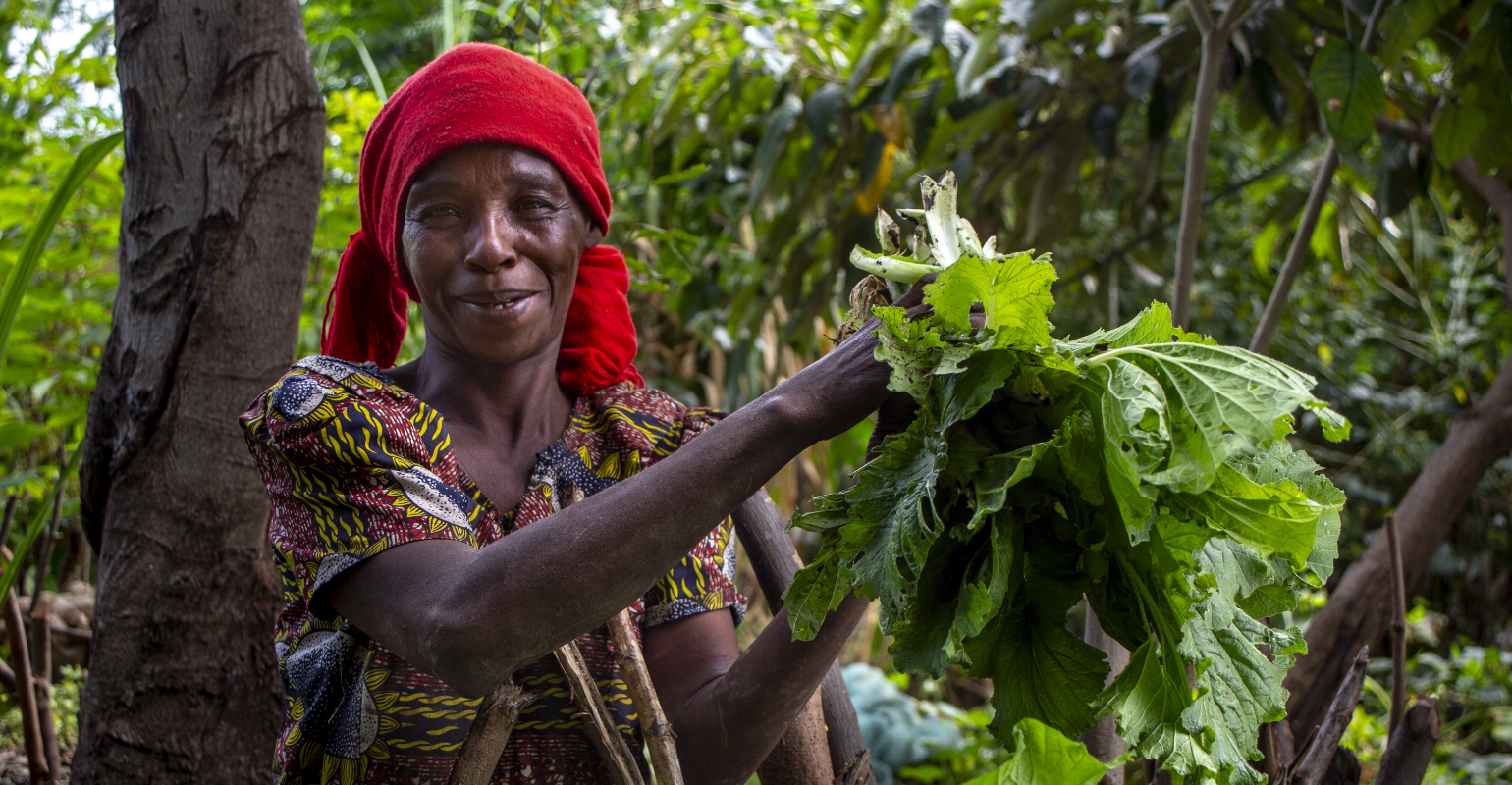
Mariam Issa, in northern Tanzania, is one such entrepreneur. Like 70% of the women we work with, Mariam is a farmer – one of the millions of smallholder farmers producing one third of the world’s food. When she first joined Hand in Hand in 2022, she was struggling to harvest enough maize to put food on the table and earning just TZS 100,000 (US $37) a month from any harvest she could sell.

Hand in Hand’s business trainers taught her how to keep track of costs and income on the farm and how to calculate her profit. They introduced her to new agricultural techniques to equip her fight back against the degraded soil and unpredictable weather patterns and increase yields.

Four years on, Mariam has more than doubled her farm earnings to TZS 240,000 (US $90) a month. She’s using the extra money to pay the grandchildren’s school fees, clothes and food. She and her husband have even started to build a sturdy new home from mud bricks.

Looking back, Mariam says,

“The most important things I learned were the business skills and how to make the most of your farm. When I farmed maize I had just two harvests a year, now I plant so many different vegetables, I can harvest frequently.”

Meet Elishiwaria – on the fast track to business success

There are millions of under-served women in Africa with the potential to expand their businesses, but who lack the credit, market connections and technical expertise to do so.

We equip women who already run enterprises to move up to the next level, raising themselves and their families well above the lower middle-income poverty line of $3.20 a day.

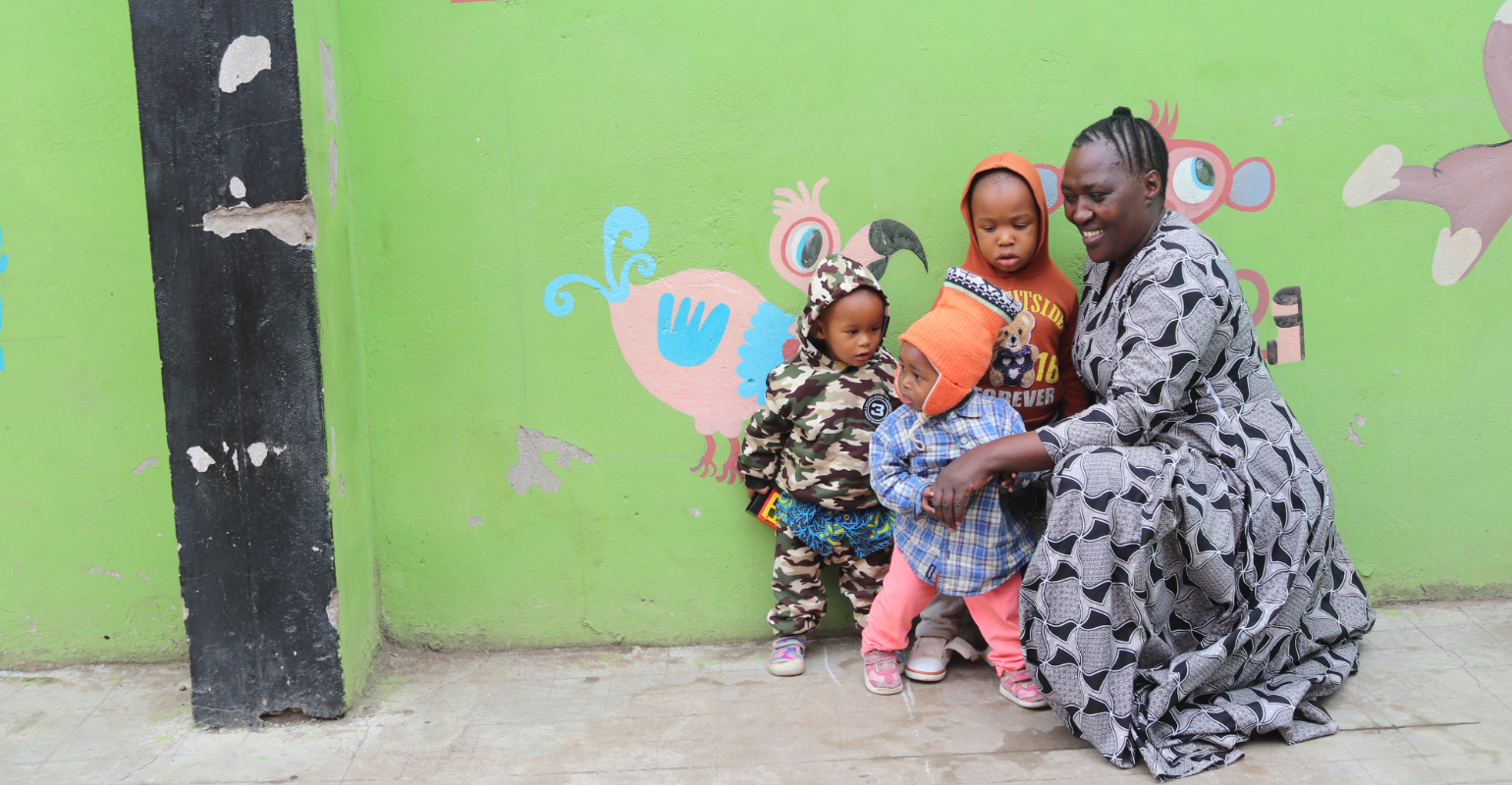
Women like Elishiwaria who, since joining our advanced business skills and leadership programme, earns five-fold to US $428 a month. She’s the proud owner of a children’s home and daycare centre where she employs three staff (a teacher and two childcare workers) to look after ten children.

Elishiwaria’s success did not come easily. The orphanage had been closed for some time, and Elishiwaria had to grapple with reams of government regulations and processes to get it up and running again.

“I never lost hope,” Elishwaria explains. “And now I can give hope to orphans and less privileged children, because we give them love, food, shelter and an education.”

Elishiwaria is passionate about education. When parents say they can’t afford to send their children to school, Elishiwaria will even pay for the children’s school fees and uniform.

Meet Pauline Mbugua – Succeeding in business through market connections

In rural Kenya, women agri-entrepreneurs face barriers that men do not. They are often locked out of larger, more profitable value chains because they will typically produce in smaller volumes.

Until recently Pauline Mbugua, farmer and entrepreneur, was one of the many women whose only option was to sell her produce at a roadside stall, earning just enough to put food on the table. The vital market and business connections she needed to take her business to the next level looked set to pass her by.

From roadside stall to Kenya Nut Company supplier

Then she joined Hand in Hand’s accelerator programme and learned how to run a successful business and how to make business connections using WhatsApp for business.

Immediately, Pauline posted every item of produce she had and that, says Pauline is, “when things started to get better”. Her first online sale of bananas went for US $82, avocados now sell for up to US $0.82 per kilo, almost four times what she could earn at the market, and she now sells macadamia nuts directly the Kenya Nut Company.

Pauline says, “I didn’t get to complete my high school education…[but] joining Hand in Hand really helped me… [they] helped me plan my farm…and now I know selling online is better as compared to local sales.”